When to Remove an Old Shed: Signs the Structure Is Past Repair
August 30, 2026
Quick Answer: A backyard shed has usually passed the repair stage once the floor flexes underfoot, the wall framing goes soft near ground level, or the roof sheathing sags between rafters. Along the Hillsborough County coast, salt air and long humid summers attack the base of a structure first, so the damage is often well advanced before anything shows on the outside. A standard 8x10 or 10x12 wood or metal shed usually comes down in a few hours, including dismantling, hauling, and clearing the pad. Larger buildings, buried anchors, and concrete slabs add time to the job.
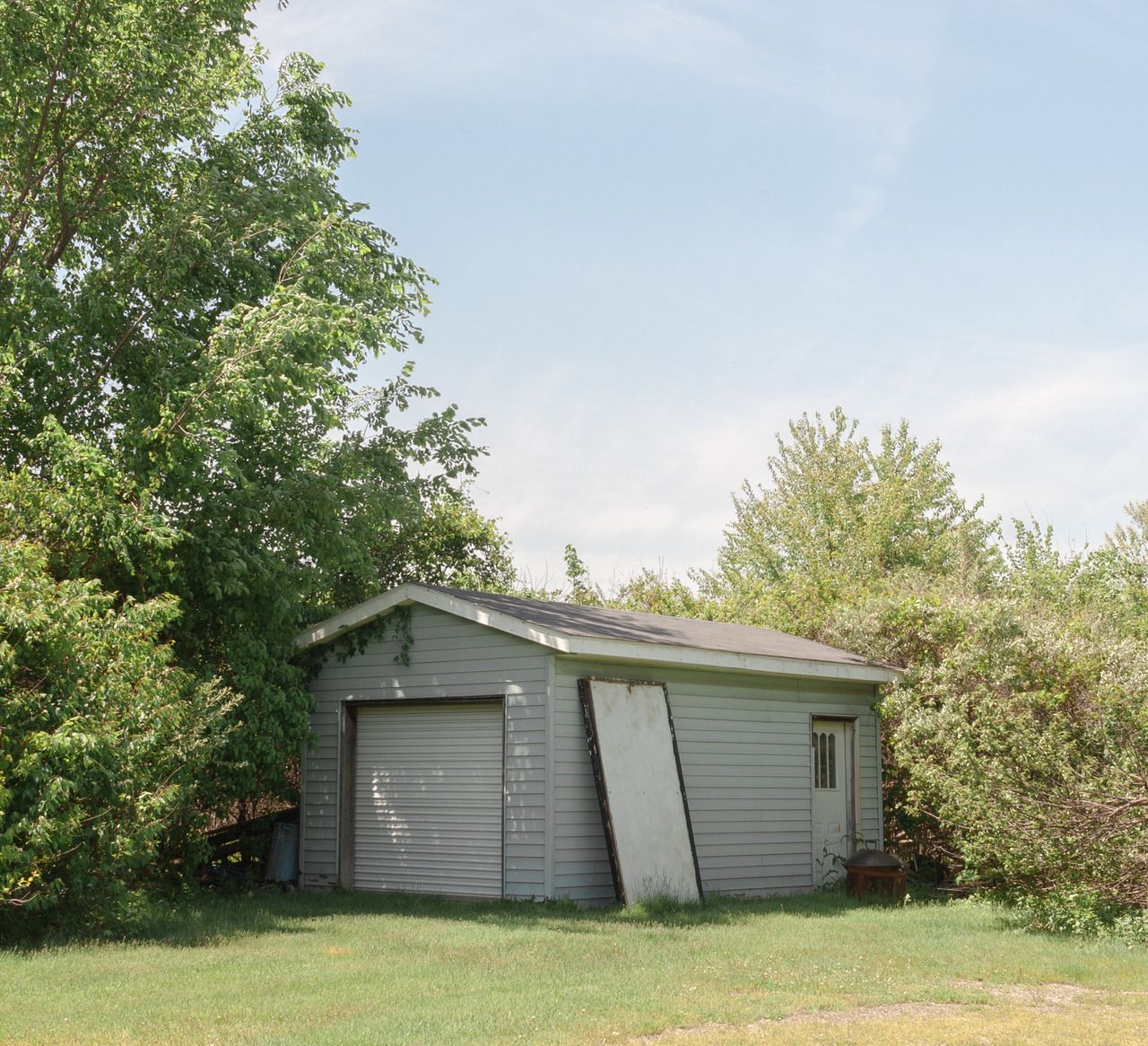
The mower goes in easily enough. Getting it back out is the problem, because the door has dropped about an inch on the hinge side and now catches on the threshold every time. That sag is rarely a door problem. It is usually the corner of the shed settling, which means the sill plate underneath has softened and is no longer holding the wall square. Most homeowners spend a season or two shimming the door before they realize the structure itself is going.
Sheds age faster in this part of Florida than the manufacturer's brochure suggests. A wooden shed sitting on grade in Apollo Beach deals with afternoon storms nearly every summer day, ground moisture that never fully dries out, salt in the air off Tampa Bay, and a termite season that runs heavy through spring. Metal sheds face the same air with a different weakness, since corrosion starts at fastener holes and panel seams where the coating was pierced during assembly.
What Actually Breaks Down First
Damage in an outbuilding follows a predictable order, and it almost never starts where people look.
The base takes the first hit
Skids, sill plates, and floor joists sit closest to the ground and stay damp the longest. Wood held above about 20 percent moisture content becomes hospitable to decay fungi, and soil contact keeps untreated lumber well past that line during the wet season. By the time a floorboard feels spongy, the joist beneath it has usually been failing for a while.
Fasteners fail before the material does
In a coastal setting, screws and nails corrode faster than the wood or metal they hold together. Panels start to shift, siding pulls loose at the bottom edge, and the whole box loses rigidity. A shed that racks slightly when you lean on the doorframe is telling you the fasteners have let go.
Roofs go quietly
Shingles on a small outbuilding rarely get inspected. Once granules wash off and the underlayment cooks, water moves down into the sheathing and along the top plate. A ceiling stain inside a shed means the roof deck has been wet for months.
Pests move into weakened wood
Subterranean termites native to Florida travel through soil and enter structures at ground contact points, which is exactly how a shed sits. Carpenter ants follow moisture-damaged wood rather than sound wood, so their presence tends to confirm a rot problem rather than cause it.
Repair or Remove
Not every tired shed needs to come down. The dividing line is usually structural rather than cosmetic.
Worth repairing: peeling paint, a torn shingle course, a warped door, one soft floorboard over an otherwise sound joist, rusted hinges, a missing vent. These are surface issues on a frame that still holds its shape.
Past repair: the floor deflects when you step across the middle, two or more corners have settled unevenly, wall studs crumble when probed with a screwdriver, the roof ridge has a visible dip, the walls no longer meet the roof squarely, or the door and window openings have gone out of square. A shed with several of these has lost the geometry that makes the structure work, and rebuilding it piece by piece usually costs more effort than starting over on a clean pad.
TIP: Probe the bottom 12 inches of two or three wall studs with a screwdriver before deciding. Sound wood resists. If the tip sinks in easily, the framing is compromised at the point where it carries the most load.
How a Shed Teardown Actually Goes
A shed is disassembled in roughly the reverse order it was built, which keeps debris controlled and protects everything around it.
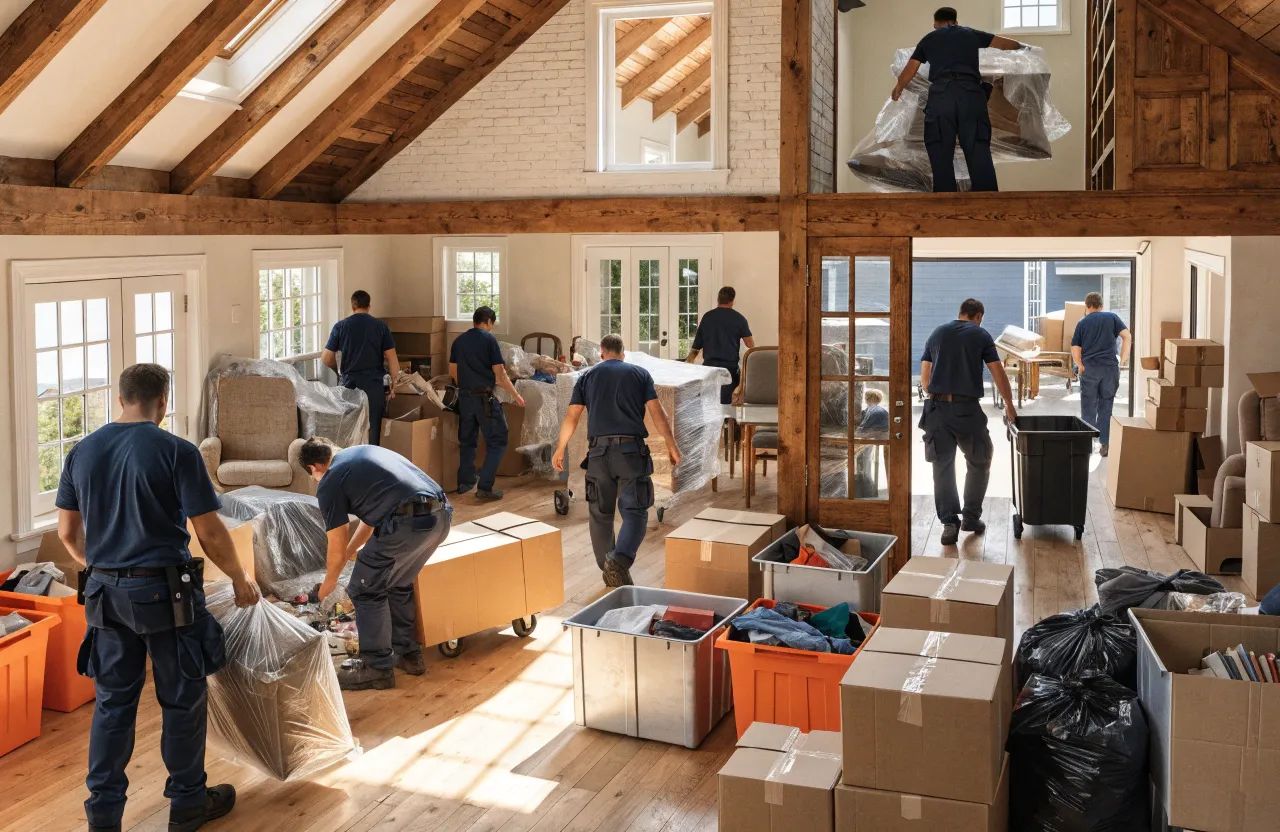
The crew starts with a walkthrough to identify what is anchored, what is buried, and what is close enough to be at risk: fence panels, irrigation heads, AC condenser lines, and planting beds all sit in the way on a typical Apollo Beach lot. Contents come out first. Roofing is stripped next, then the roof deck and rafters, followed by wall panels and framing, and finally the floor system and any skids or anchors below it. Metal sheds come apart differently, with panels unbolted and stacked flat rather than broken up, because sheet metal separates cleanly for recycling.
Everything is loaded as it comes down rather than piled on the lawn, which is what keeps the yard usable at the end of the day. The pad gets raked and cleared of fasteners, glass, and splinters so the space is safe to walk on immediately.
If the shed sat on a concrete slab, you have a choice. The slab can stay as a base for a replacement building, a grill station, or a potting area. If it is cracked, spalled, or simply in the wrong place, it can be broken out and hauled with the rest of the material.
Light Demolition Covers More Than Sheds
The same approach applies to most small outbuildings that have outlived their use. Gazebos with rotted posts, playhouses the kids grew out of, sagging carports, pergolas that lost their beams in a storm, deteriorating deck sections, and screen structures all come apart under the same process.
Storm damage is its own category. After a system moves through, a partially collapsed structure is unstable in ways that are hard to read from the outside, since loads have shifted onto framing that was never meant to carry them. Leaning walls, snapped rafters, and roof panels still attached at one corner are best left alone until a crew with the right equipment can bring them down in a controlled sequence.
WARNING: Do not pull a leaning shed upright with a truck and a strap. The structure fails at the weakest point rather than the point you are pulling from, and the collapse direction is unpredictable.
Where the Material Goes
A single wood shed produces a surprising volume of mixed debris: dimensional lumber, plywood or OSB sheathing, asphalt shingles, felt, hardware, and often a floor's worth of stored items that never got sorted.
Metal panels, aluminum trim, and steel framing separate cleanly and go to scrap. Clean, untreated lumber can often be diverted for reuse or mulch. Pressure-treated wood and asphalt shingles are kept separate because they are handled differently at the transfer station. Usable contents found during a cleanout, from bikes to patio furniture, are worth setting aside for donation before the demolition starts.
Sorting on site rather than at the end is what keeps material out of the landfill, since mixed loads are far harder to divert once they are compacted in the truck.
Timing the Job
Two windows tend to work best in this area. Late winter through early spring is dry, the ground is firm enough for equipment, and the work happens before the Atlantic hurricane season opens on June 1. That timing matters, because a deteriorating outbuilding becomes a source of airborne debris once winds pick up.
The other window is immediately after a storm, when a damaged structure needs to come down before it drops further. Emergency response for hazardous structures is a normal part of this work, and the assessment happens on arrival rather than over the phone.
Frequently Asked Questions
Can a rotted shed be repaired instead of removed?
Sometimes, if the rot is confined to one wall or a couple of floorboards over sound framing. Once the sill plates or multiple studs have softened at ground level, the frame no longer holds its shape, and each repair exposes the next failure. Probe the framing at the base before deciding.
Do I need to empty the shed before removal?
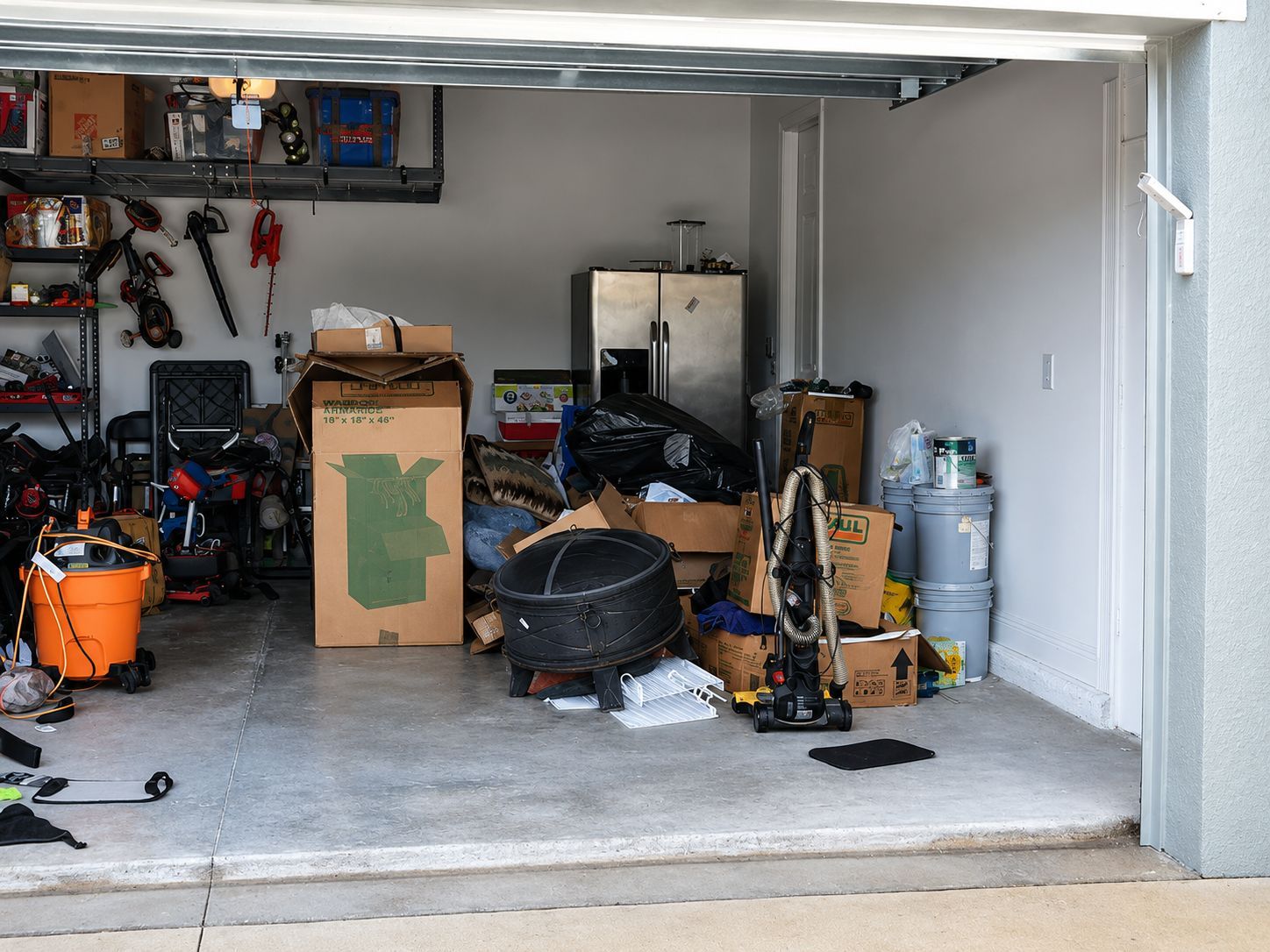
It helps, but it is not required. Crews routinely handle sheds packed with old paint cans, lawn equipment, and boxes. Pulling out anything you want to keep beforehand is a good idea, because sorting slows the work down and small items are easy to lose in a debris load.
What happens to the concrete slab underneath?
It stays or it goes, depending on what you want the space for. An intact slab makes a ready base for a replacement shed or an outdoor work area. A cracked or badly placed slab can be broken up and hauled out with the rest of the material.
How long does shed removal take?
Most standard residential sheds come down within a few hours. Size, construction type, and access drive the timeline. A shed behind a narrow side gate or wedged between a fence and a pool cage takes longer than one with open driveway access.
Can a shed be moved instead of demolished?
Relocating a small, structurally sound shed on skids is sometimes possible across a flat lot. A shed that is leaning, rotted at the base, or fastened to a slab will not survive the lift, which is why deteriorating structures are dismantled rather than moved.
What counts as light demolition?
Small, non-load-bearing structures: gazebos, playhouses, carports, pergolas, screen enclosures, deck sections, and storage buildings. It does not extend to house demolition or anything involving the main structure of a home.
Is the site usable right away?
Yes. The pad is cleared of debris and fasteners, raked, and leveled as part of the work, so the area is ready for sod, gravel, a new building, or whatever comes next.
What Clearing an Old Shed Really Gives You
An old shed rarely announces the day it stopped being useful. It slides into that role slowly, becoming the place where the door sticks, the roof drips after every storm, and nobody wants to reach into the back corner. Once the framing softens at the base, no amount of shimming brings the geometry back. Clearing the structure opens up a section of yard that has been quietly written off, often for a good deal longer than anyone realized.
Most homeowners are surprised by how clean the ground looks once the debris is gone and the pad has been raked flat. Crews with several+ years behind them read a failing structure quickly and take it apart in a controlled sequence rather than wrestling it down. That kind of experience is what Haul911 Rapid Junk Removal
brings to
shed teardowns and light demolition
around St. Petersburg, FL, where salt air shortens the life of every outbuilding it touches.