Garage So Full You Can't Park? A Junk-Removal Game Plan
July 18, 2026
Quick Answer: A full garage clears fastest when you stop treating it as one giant pile and start treating it as a sorting project. Pull everything into four buckets: keep, donate, recycle, and haul. Work one zone at a time so you can see progress by the hour instead of by the weekend. A junk crew takes almost everything a household piles up, from broken furniture to old appliances and boxes of forgotten stuff, while a short list of hazardous items has to go elsewhere. Book a pickup, clear a path to the door, and let the heavy lifting fall to people who do it every day.
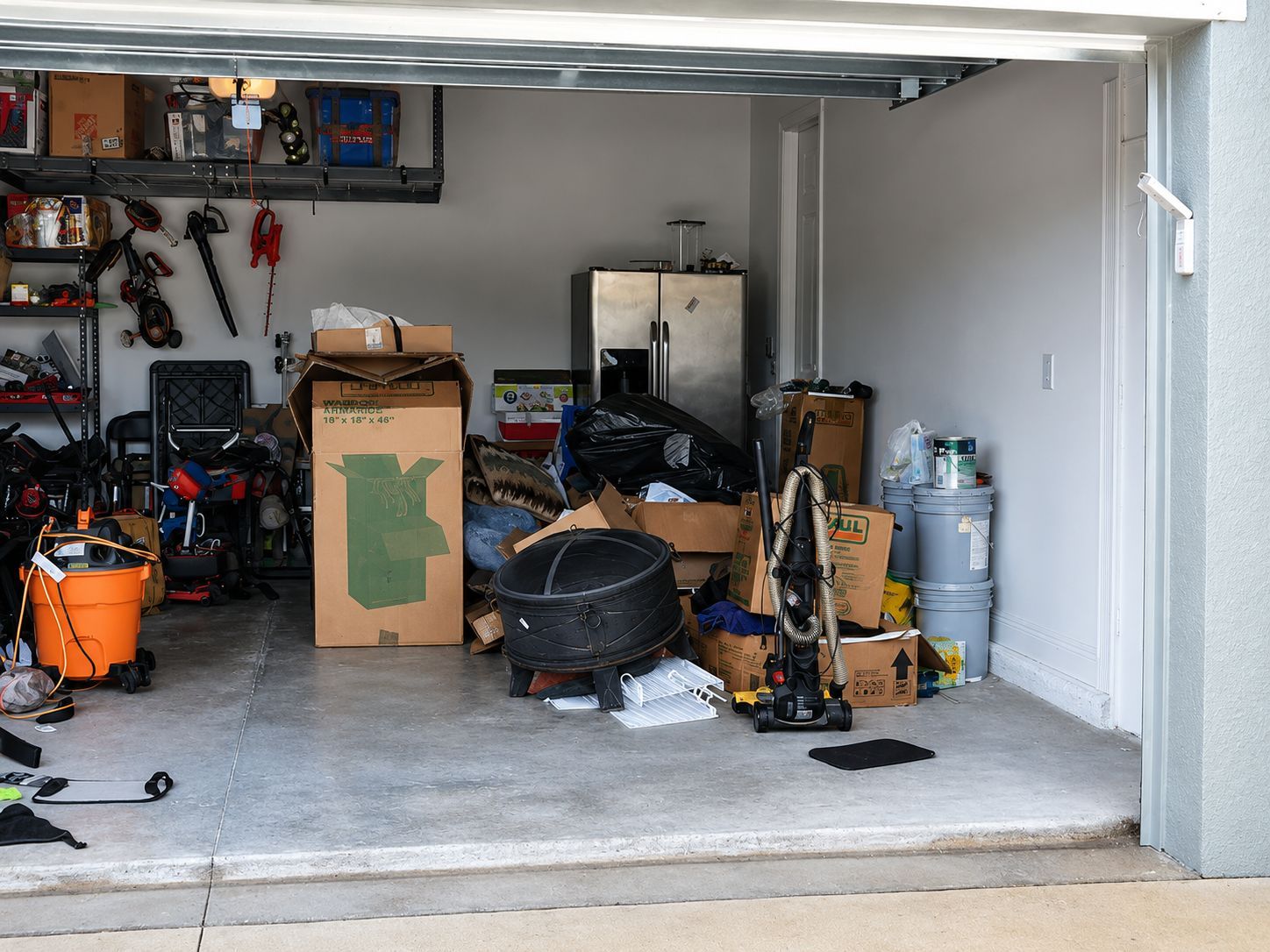
You back into the driveway, hit the button, and the garage door rolls up on the same wall of boxes it has shown you for months. The car stays in the driveway again, baking in the Florida sun, because there is no clear lane to the far wall and no floor to speak of. Somewhere behind the bikes, the busted patio set, and the tower of plastic bins is a workbench you have not touched since you moved in. If that scene sounds familiar, you are not lazy and your house is not a lost cause. A garage fills up quietly, one "I'll deal with it later" at a time, and it clears out the same way it filled, with a plan and a couple of focused sessions.
How a Garage Gets This Full Without You Noticing
A garage is the one room with no rules. Nobody sees it, guests do not walk through it, and it becomes the default landing spot for anything you are not ready to decide on. Over a few years, that adds up fast.
The pass-through pile
Items headed for donation, the dump, or a friend's house land near the door and never leave. The pile grows because it is easier to add to it than to load the car.
The someday projects
Leftover paint, spare lumber, a chair you meant to reupholster, and parts from an appliance you swore you would fix. Each felt reasonable on its own. Together they eat half the floor.
Seasonal creep
Holiday tubs, beach gear, hurricane supplies, and lawn equipment all need a home, and the garage absorbs them until the seasons overlap and nothing has a spot.
Hand-me-downs and hauls you inherited
A relative downsizes, a neighbor moves, and suddenly you are storing furniture you never chose. In a retiree-heavy stretch of the Tampa area, this happens more than most people expect.
None of that makes you a hoarder. It makes you normal. The fix is not shame, it is a system.
Start With a Sort: Keep, Donate, Recycle, Haul
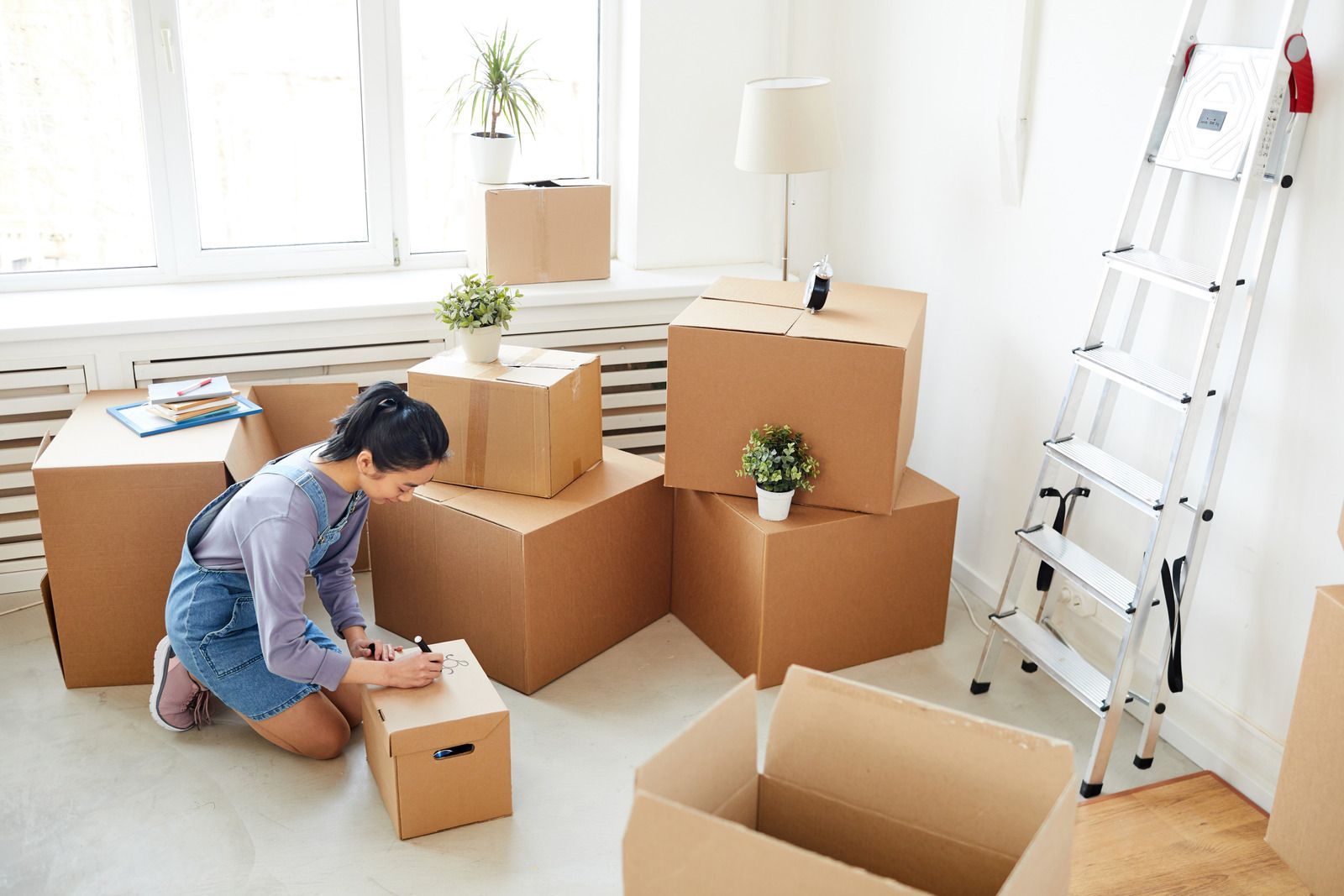
Before you move a single box toward the door, decide where everything is allowed to end up. Four categories cover almost anything a garage holds, and naming them out loud keeps you from re-stacking the same items in a new corner.
Keep
Things you use, love, or really need within the next year. Tools, sports gear you actually play, seasonal decor you unpack every year. Be honest about the word "use."
Donate
Furniture, working small appliances, unopened supplies, kids' gear, and household goods in decent shape. Someone else can put these to work, and steering them to donation keeps them out of the landfill.
Recycle
Scrap metal, cardboard, electronics, and clean plastics. Old bikes, broken shelving, and dead electronics have real recycling value even when they are useless to you.
Haul
Anything broken, water-damaged, moldy, or simply done. This is the bulk of what a junk crew carries out, and it is usually the pile that has been blocking your car the longest.
Give each category its own physical spot on the driveway or lawn. Seeing the four groups grow separately is what turns a vague mess into a finished job.
WARNING: Florida humidity is hard on stored goods. Cardboard sags, tools rust, and fabric-covered furniture can grow mold in a closed garage long before you notice a smell. If a "keep" item is soft, damp, or spotted, it usually belongs in the haul pile, not back on the shelf.
Work the Garage in Zones, Not All at Once
Trying to empty the whole garage in one heroic push is how most cleanouts stall out by lunch. Break the space into zones and finish one completely before you move on. A cleared zone gives you working room and a visible win.
Zone one: the door and the lane
Clear a straight path from the garage door to the interior wall first. This single lane makes every other step easier because you can carry items straight out instead of shuffling them sideways.
Zone two: the floor
Anything sitting directly on the concrete gets sorted next. Floor clutter is what actually blocks your car, so clearing it delivers the payoff you came for.
Zone three: shelves and walls
Work the vertical storage once the floor is open. You will find duplicates, expired supplies, and boxes you forgot you owned.
Zone four: the far corners and overhead
Save the rafters, hooks, and back corners for last. These are usually long-term storage, and by now you have the space to stage and sort what comes down.
TIP: Set a timer for two hours per session instead of promising yourself a full weekend. Short, finished sessions beat marathon days that leave the garage worse than when you started. Two or three of these, and the floor reappears.
What a Junk Crew Hauls, and What They Cannot Take
One reason garages stall is that the biggest, heaviest items feel impossible to deal with alone. That old sectional, the dead chest freezer, the treadmill nobody runs on. This is exactly where a professional junk crew earns its keep, because almost everything in a normal garage is fair game.
Furniture
Couches, chairs, tables, shelving, cabinets, and mattresses. Crews break down what needs breaking down and carry it out without scratching your walls or door frames.
Appliances
Refrigerators, freezers, washers, dryers, stoves, and dishwashers. Refrigeration units have their refrigerant handled properly, and the metal often heads to recycling.
Electronics and scrap metal
Old TVs, monitors, computers, exercise equipment, bike frames, and shelving brackets. Much of this stream gets recycled rather than dumped.
Household clutter and yard gear
Boxes, bins, toys, holiday decor, broken tools, hoses, and outdoor furniture. If it piled up in the garage, it can usually leave in a single visit.
Renovation leftovers
Drywall scraps, old cabinets, flooring, and lumber from projects that wrapped up years ago.
There is a short list of items a junk crew cannot legally load onto a standard truck, and knowing it up front keeps your pickup on schedule.
Paints, chemicals, and fluids
Wet paint, solvents, pesticides, herbicides, automotive oil, and cleaning chemicals need a household hazardous waste facility or a local drop-off event.
Pressurized and flammable containers
Propane tanks, fire extinguishers, and gas cylinders are explosion risks and cannot ride in a junk truck.
Batteries and tires
Car and lithium-ion batteries and old tires have their own recycling channels and disposal rules.
Asbestos and medical waste
Older insulation or tile suspected of containing asbestos requires a certified abatement pro, and sharps or biohazard material need specialized handling.
A good crew will point you toward the right disposal path for those excluded items rather than leave you guessing. Set them aside in their own corner so nothing slows down the haul.
Where It Actually Goes: Donation and Recycling Before the Landfill
A lot of people assume everything a junk truck carries off heads straight to the dump. Responsible haulers work the opposite way. The goal is to divert as much as possible from the landfill, and a garage cleanout is full of items that qualify.
Donation first
Furniture in usable shape, working appliances, and household goods can go to local charities and reuse outlets, where they get a second life instead of a burial.
Recycling second
Metals, electronics, cardboard, and certain plastics have established recycling streams. Appliances alone carry a lot of recoverable steel and aluminum.
Landfill last
What is truly broken, contaminated, or beyond reuse goes to proper disposal. By the time a load reaches that stage, the reusable and recyclable material has already been pulled out.
This matters beyond the feel-good factor. Sorting on the front end, into your keep, donate, recycle, and haul groups, makes the whole diversion process faster and cleaner. The work you do on your driveway directly decides how much of your garage stays out of a landfill.
Booking the Crew and Prepping for a Smooth Pickup
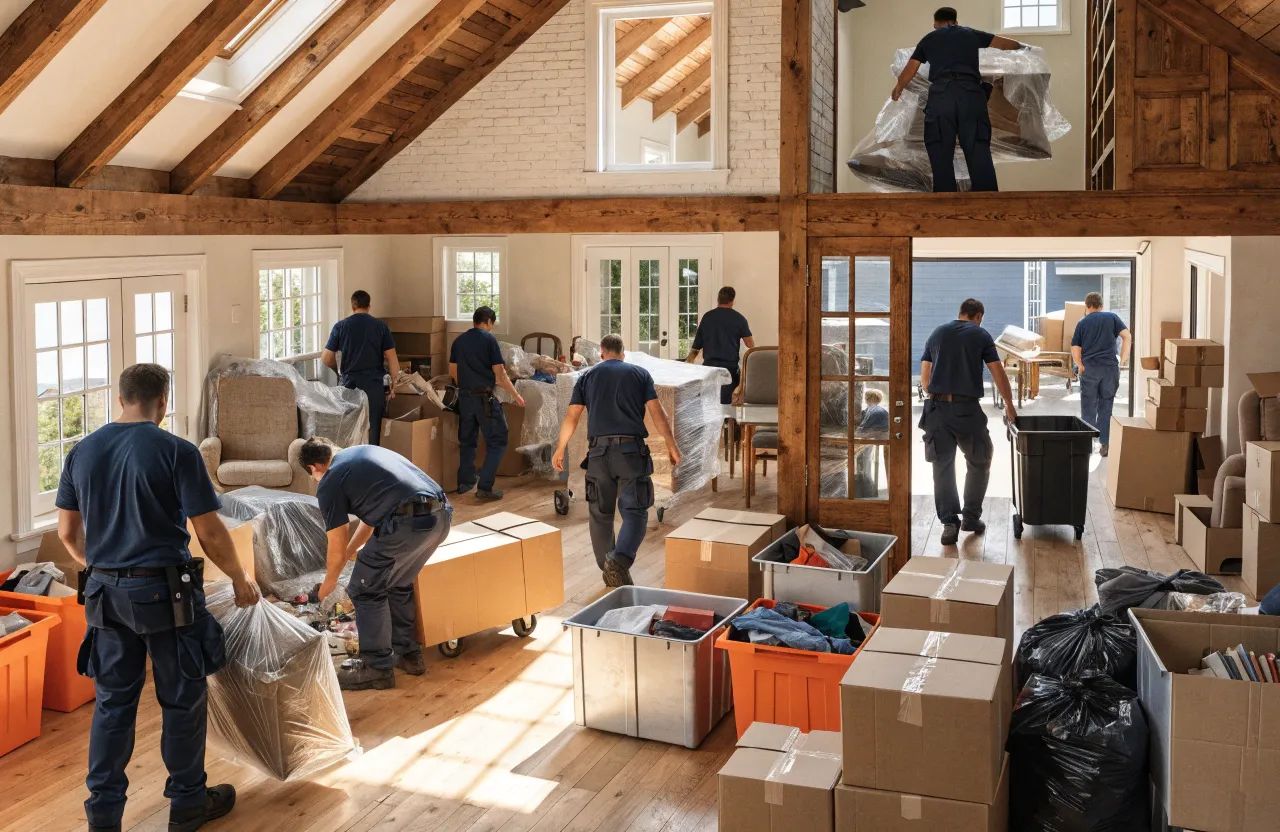
Once the sorting is done, the removal itself is the quick part, especially with a crew that offers same-day or next-day service. A little prep makes the visit fast and keeps your floors and door frames safe.
Separate keep from remove clearly
Stage the haul pile where the crew can reach it and keep your "keep" items well away from it. Clear labeling prevents the one mistake everyone dreads, watching something you wanted disappear onto the truck.
Clear the pathways
Open a straight route from the haul pile to the driveway. You do not need to move the heavy items yourself, that is the crew's job, but an unobstructed path speeds everything up.
Flag the awkward pieces
Point out the two-person items, the freezer full of who-knows-what, or the shelving anchored to a wall. A heads-up lets the crew bring the right approach.
Set the excluded items aside
Keep paints, chemicals, propane, batteries, and tires in their own spot so the crew can take everything else without pausing to sort around them.
Think about timing
In hurricane season, an open garage is worth having ready before a storm, both for parking the car under cover and for storing supplies. Clearing sooner rather than later gives you that room when you need it most.
With the plan in place and the piles staged, a garage that has been unusable for months can be walkable, and drivable, in a single visit.
Frequently Asked Questions
How long does a full garage cleanout take?
The sorting takes you the longest, usually two or three focused sessions of a couple hours each. Removal is fast once piles are staged. A crew often clears a sorted, walkable garage in one visit.
Do I have to move the heavy stuff to the driveway first?
No. You do not need to wrestle a freezer, a sectional, or loaded shelving to the curb yourself. A crew handles the lifting and carrying, which protects your back and your walls, floors, and doorframes.
What will a junk crew not take out of my garage?
Hazardous items are the main exclusions: wet paint, solvents, pesticides, automotive fluids, cleaning chemicals, propane tanks, fire extinguishers, car and lithium-ion batteries, tires, asbestos, and medical waste. Everything else, from furniture to boxed clutter, qualifies.
Can old appliances and electronics really be recycled?
Yes. Refrigerators, washers, and dryers carry recoverable metal, and their refrigerant gets handled properly first. Old TVs, computers, and electronics have e-waste channels rather than landfills. Responsible haulers route these items toward recycling when possible.
Is it worth clearing the garage before hurricane season?
For most Tampa-area homeowners, yes. A cleared garage lets you park under cover when a storm rolls in and store water, batteries, and supplies within reach. It also keeps loose items from becoming projectiles later.
What if some of my stored things got moldy or water damaged?
That is common in a humid garage, and those items usually belong in the haul pile. Fabric furniture, cardboard boxes, and soft goods that took on moisture are rarely salvageable. Set them with the load.
Park Your Car Where It Belongs
Picture the door rolling up on an open floor, a clear lane to the wall, and enough room to pull the car in out of the heat and the next storm. That is a weekend of sorting and one focused pickup away, not a fantasy. When the piles are staged and you are ready to hand off the heavy lifting, Haul911 Rapid Junk Removal
clears full garages for homeowners and businesses across St. Petersburg, Florida, with fast, often same-day service, several
years of experience, and a habit of donating and recycling whatever can be saved before anything reaches a landfill. Sort your keep, donate, recycle, and haul piles, clear a path to the door, and book a pickup to get your garage and your parking spot back.